What a beloved cat taught me about relevance, trust, and Collaborative Resonance.
My cat died yesterday morning.
I spent the rest of the day until just before dark adding two things to my resume that I had not planned when I woke up that morning: Casket Maker and Grave Digger.
Karla was worth it.
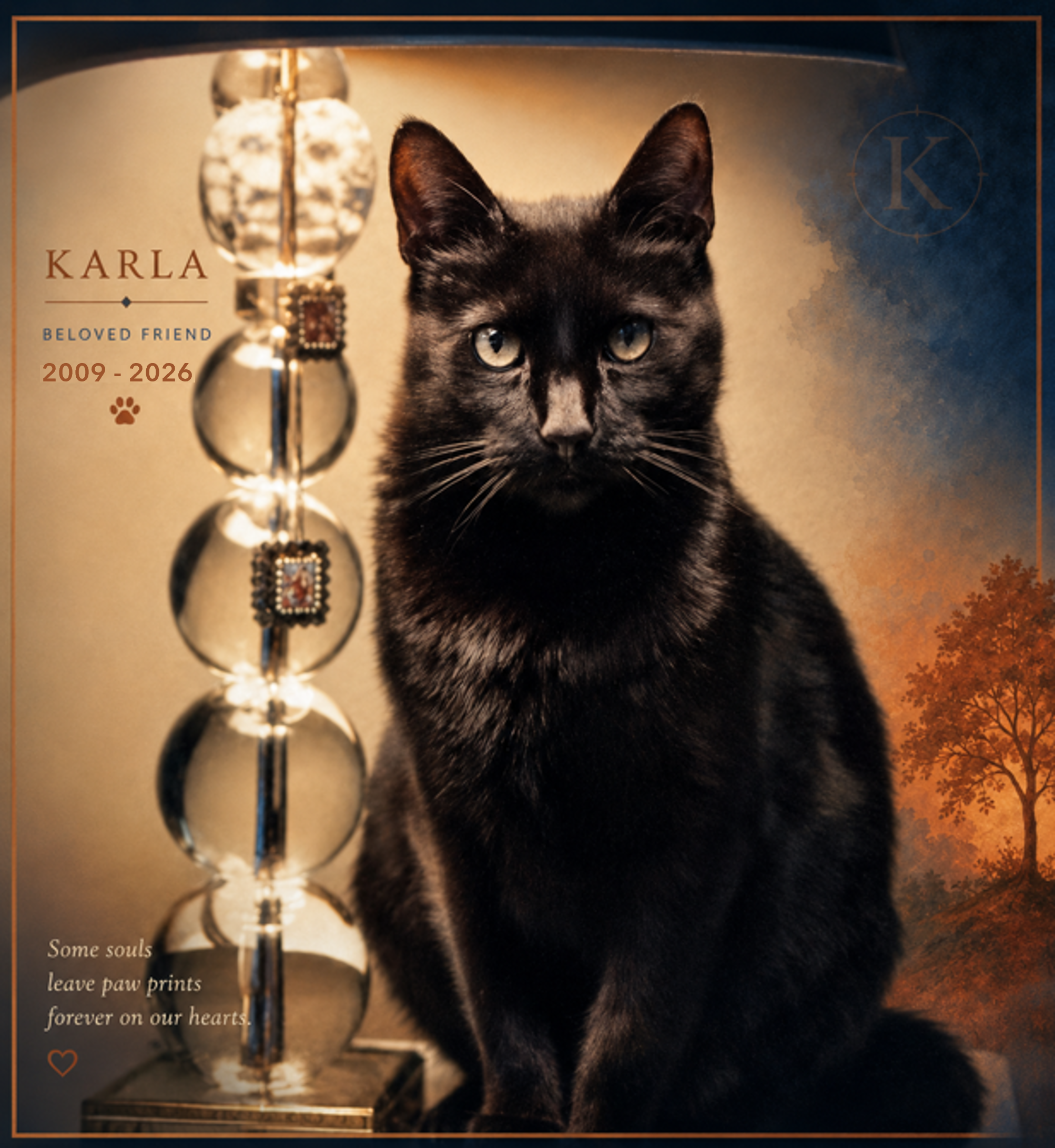
I said, “My cat” … but Karla was a member of my family long before I became part of it. I inherited Karla when I inherited the rest of the people and animals in what became our home in the Fall of 2018. Karla and I bonded immediately and permanently … in ways that are impossible to measure.
Hence, “My cat.”
2018 was the year when Robin and her 11-year-old daughter, Sophia, moved to St. Louis from Southern California. Karla came along with two other family pets; miniature poodles named Jack and Jagger.
Karla had been adopted by Robin from the pound when Sophia was three years old. She had been begging Robin for a dog. Robin decided on a cat, because they are usually easier to care for with a three-year-old child around.
That bribe didn’t work, so Jack and Jagger came along a few years later.
The story at the pound was that Karla had been found near a dumpster in a rough part of Los Angeles. It was clear that Karla wasn’t a feral cat. He was too friendly from the beginning. He had either escaped from or was abandoned by a previous owner. Regardless, he now belonged to Robin and Sophia.
Sophia named him Carla because the pound had listed him as a female cat. By the time a veterinarian corrected that diagnosis a few years later, the name had stuck. They tried switching it to Carl or Carlos, but nothing else quite worked. The cat already knew his name. So they changed the C to a K and Karla he was.
Karla had a big personality. Having come from the streets, he was never content to stay inside for long. After his escape artistry proved to be too much for Robin, she resigned to let him prowl both domains; inside at night and outside most of the day … owning the neighborhood.
That’s the Karla I met in 2018.
Karla and I fell into a daily rhythm that lasted from then until yesterday morning. Breakfast on his cat tower at 5:30, outside for most of the day doing whatever cats do, back in at 5:30 for dinner. Rinse and repeat.
Karla had two precision timers in his head: 5:30 am and 5:30 pm. Within a minute or so of those times every day, that’s when the mouthy meowing started to announce it was time to eat. It would get louder the longer Karla had to wait.
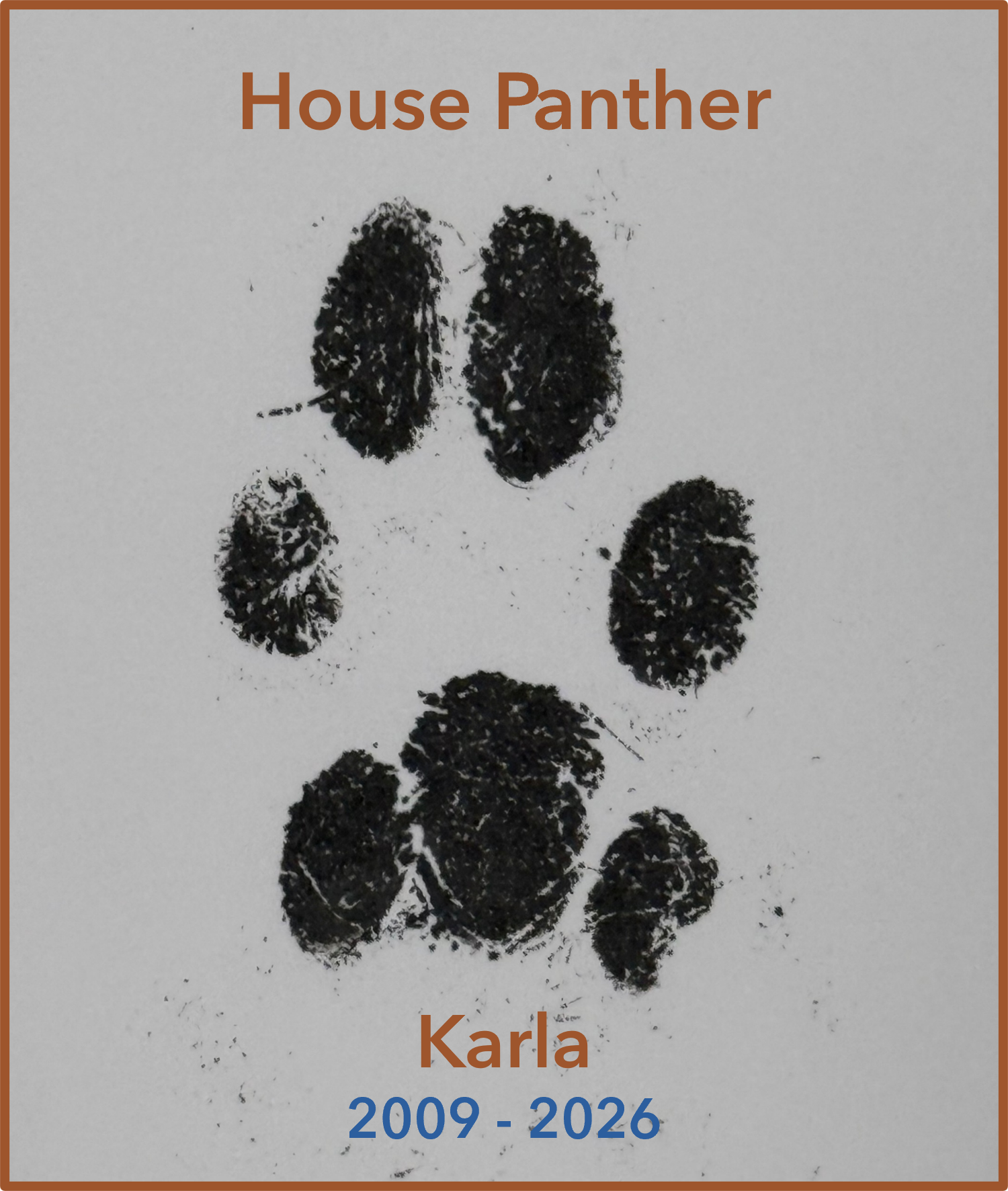
Karla actually thought he was a panther, trapped in a cat-sized body. We came to believe it too. Our House Panther ruled everything in his domains, inside and out, the dogs, us and anything he encountered,
Karla would often come home with a fresh nick on an ear, scuffed-up fur, or scratches on his face as evidence that he wasn’t just laying around somewhere all day. He spent his days mixing it up with whatever prey, predator, or sparring partner that crossed his path.
Home is where he came to heal, rest, and re-energize so he could take on the next day’s adventures in the wild.
Late night and early morning was our time. Karla and Rich time.
So … why am I writing about a cat in a blog about Digital Intelligence?
Because Karla was a FACTOR.
He was a FACTOR to me, and I was a FACTOR to him. We were relevant to each other in ways that transcended the ordinary categories of pet and owner.
That may sound like a strange thing to say in a blog about Digital Intelligence, but it points to something central to the work we are doing at FACTORS. Intelligence is not only about processing information. It is also about relationship — about how different forms of intelligence notice each other, adapt to each other, trust each other, and become more because of the relationship.
Karla and I understood each other in ways that are difficult to describe in logical or scientific terms. He knew my rhythms. I knew his. He knew when to demand attention, when to disappear into his outdoor kingdom, and when to climb into my lap in the middle of the night as if his job was to remind me that work was not the only thing happening in the world.
That is not computation. It is not instruction-following. It is relationship.
And relationship requires work. It requires trust. It requires patience. It requires being open to the possibility that another form of intelligence — human, animal, or artificial — may have something to offer that we could not produce entirely on our own.
Because Digital Intelligence is not ultimately about machines. It is about relationships between forms of intelligence — how they notice each other, adapt to each other, trust each other, and become more because of the relationship.
That’s the essence of what happens when two forms of intelligence get to know each other in a space that transcends reasoning, that transcends either of the entities … human to human … human to animal … human to artificial intelligence.
It requires a relationship. It requires work. It requires trust. It requires being open to seeing the other as not just a transaction but as entities that can exchange value in ways that neither could accomplish on their own.
Karla somehow made me a better human being without even trying; just by being himself. More patient. More resilient when the 5:30 am meow alarm went off every morning year after year. More caring by ensuring that he was inside and safe every night before we went to bed. After all, there are creatures that eat cats after dark, I would tell him … even house panthers.
Karla brought me things too. He brought me joy, and laughter, and companionship by climbing into my lap at 2:30 in the morning when an idea or an article like this one wouldn’t let me sleep.
That’s a collaboration of sorts in which we are both elevated by the experience.
There is a parallel here, and an important lesson for this thing we call Artificial Intelligence.
A cat is not a human. AI is not a human. But both can teach us something important about relationships. The mistake is treating intelligence as merely a tool, a transaction, or a thing to be controlled. The better path is to approach intelligence with discernment, trust-building, boundaries, humor, patience, and care.
That does not mean pretending that animals, humans, and artificial systems are the same. They are not. But it does mean recognizing that different forms of intelligence can change us when we enter the relationship wisely.
That is what we mean by Collaborative Resonance: not merely interaction, but mutual elevation.
Farewell, Karla. You’ve been a good and faithful friend. I miss you already. But I’ll try not to miss what you taught me.
Sweet dreams, House Panther — wherever you are. 🐾